Saturday, 18 August 2012

Trondheim, Norway

Thursday Aug.9/12
It was raining in Trondheim; nevertheless, I made my way to the main tourist attraction which is the Cathedral.


Nidaros Cathedral - It started being built in 1070 AD. For nearly 1000 years the cathedral has been subject to a building and refurbishment process.


It was an incredible looking cathedral... which is of course why there was no photos allowed.


I tried to sneak some in anyway...but none of them turned out very good. This one is the best I got.


The pass for entrance into the museum also included entrance into the Archbishop's Palace Museum and the National Regalia.

Both had no photography signs and both were only somewhat interesting.

There was a museum in the middle of them, not really famous or even mentioned in the guide, free entrance, full photography allowed and it was by far the best.
The army museum.
I spent the most time here.. learning about the war history from Norwegians perspective.

I will just write briefly about the different wars. I apologize for the incompleteness of it.. It is more difficult to write about it, a week after seeing it.

Starting with the Nordic 7 years of war, dating from 1563 - 1570.  It was the longest, most destructive war and in the end, neither Norway, Sweden or Denmark had met their goals and their borders remained the same.


The Kalmar war from 1611-1613 took place because the Swedish King wanted control over the Northern Territories.


The Hannibal Feud from 1643- 1645 resulted in many Norwegian military victories, but due to the peace treaty initiated in 1645, Norway lost large territories.

The Great Nordic War from 1700-1721. A battle between Sweden and Russia, with Norway and Denmark allying with Russia. The Swedes tried to conquer Norway in 1716 and in 1718 with little success. Their King, Karls the 12th died in the attack forcing Swedish troops to retreat.

The war against Sweden (1808-1809). During the Napolionic wars, Denmark and Norway stood on the french side, while Sweden allied with England. Sweden again attacked Southern Norway and ended up retreating.  Interesting fact: 2000 Ski Troops - used ski units to serve in this war.

1814 -1905 Norway entered a Union with Sweden.


In 1940 Germany surprised attacked Norway , occupying many major cities. Norway fought, with allied help and in 1945 Germany surrendered as Germany territory was being invaded and many civil and military services were breaking down.


So many guns and weapons.. It was very neat. I wish the text and research was better.. but it's the best I can do.

I spent the rest of the afternoon just touring around the city. I enjoyed some of the unique architecture.

Monday, 13 August 2012

Bergen, Norway Day 4

Wednesday Aug.8/12
Anita works in the hospital as a secretary. She took me there in the morning and I found it very interesting to get a look at a Norwegian hospital. She works in an outpatient / day surgery department. She introduced me to many of her lovely co-workers, who were very friendly to me (I wish I had taken a photo!).


My first attraction of the day was Ulriken - the highest mountain of the 7 surrounding Bergen.


The gondola takes you up to the viewing platform, which is 643 meters above sea level.


From the top of the gondola there is a panoramic view of the city, mountains, sea and fjords.


I was there first thing in the morning and I went up the gondola with a tour group full of old people. So they saw the views then went into the cafe for coffee and I continued to rock climb my way further up the mountain. It was great.. just me and the mountains!


I was a little out of my rock climbing comfort zone when I scaled down this side of the mountain. It was a bit scary, thrilling and fun!


I took videos but they don't work on the blog for some reason :/


After playing in the rocks for a couple hours, I headed back down to sea level to check out some of the town.


I went to the Leprosy Museum.
They believe that Leprosy started infecting Norwegians around 1000 AD. A slow, long-lasting, fatal disease was problematic during the 13-18th centuries; the disease spread its way through Europe.


The museum was focused on how the Lepers were out casted in society. It went through the history of the leper hospitals and doctors that worked specifically with leprosy.  The conditions in the hospitals were very poor, they called them the living graveyards until the 18th century. New hospitals were opened and more scientists were involved with the disease. The rate of leprosy rapidly declined in the late 1800's-1900's. In 1856 there were 2858 cases (every 2 /1000 Norwegians affected) and in 1910 there were 326 cases and the last patients infected with leprosy died in 1946.


After this museum, I walked around the old town, Bryggen.

Bryggen is a World Heritage site in the medieval quarter of Bergen.

Bryggen has been ravaged by many fires (the biggest in 1702) and it reduced the whole city to ashes. It was rebuilt on the foundations that had been there since the 11th century.

The museum is based on the findings of the archaeological excavations of Bryggen from 1955 on.  The excavation provided insight into commerce, shipping, handicrafts and everyday life in medieval times.

There are now 62 protected buildings in Bryggen that rest on 10 meters of deposits formed by the remains of older, but similar buildings.


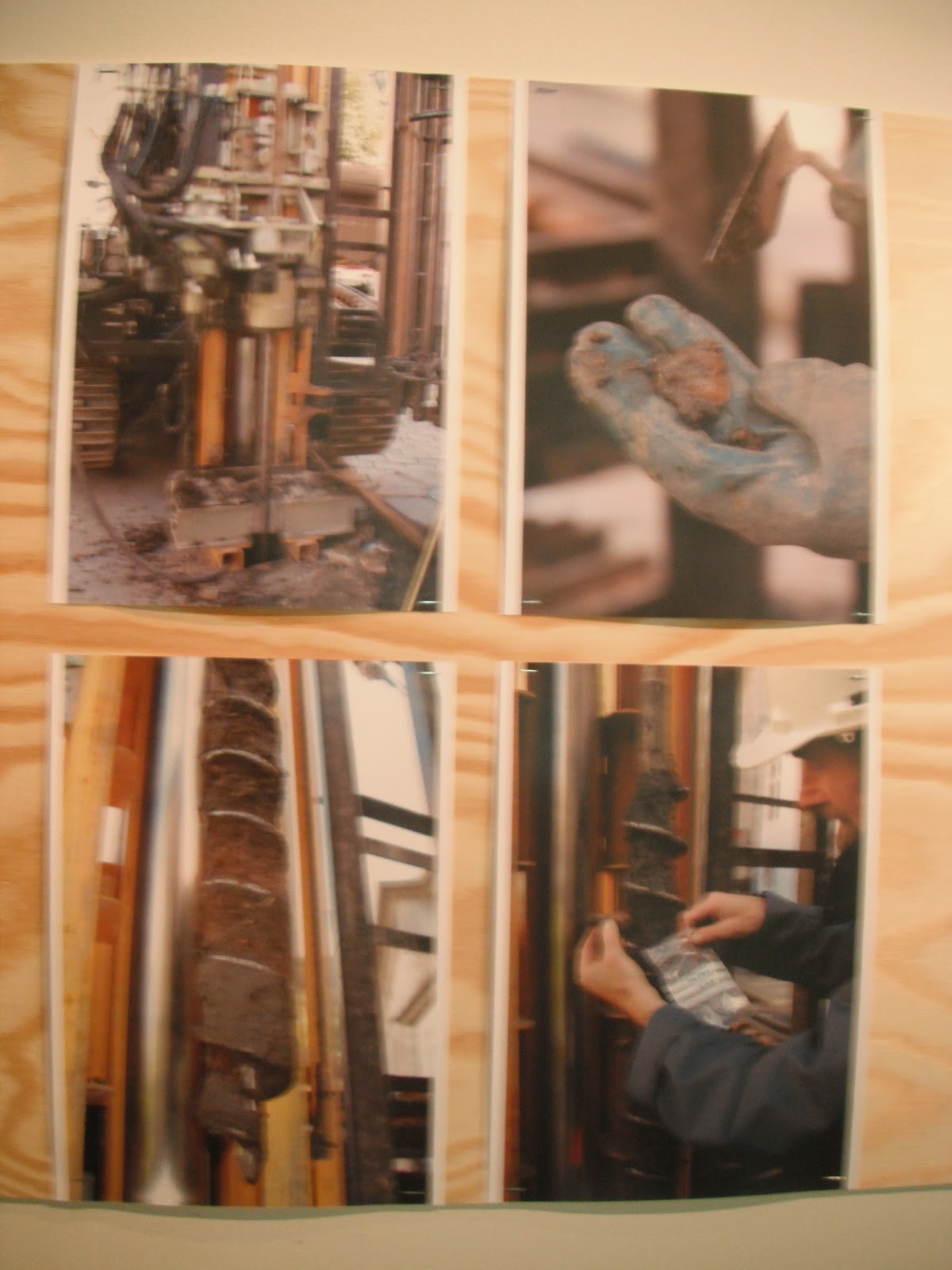
They created 30 dipp wells that document the temperature, oxygen content and groundwater levels of the deposits.
To preserve and stabilise the deposits they use the dipp wells to ensure there is no groundwater leakage and also to pump new oxygen-poor water into the deposits.


I walked through the beautiful city centre to reach the bus terminal where I headed to the airport to catch my flight to Trondheim.

Friday, 10 August 2012

Bergen, Norway Day 3


Tuesday Aug. 7/12
Sonja drove  me into the city center later in the morning.


I navigated my way through the city center to the bottom of Mount Floyen (one of the 7 mountains surrounding Bergen).

Here there is a cable railway called the Floibanen Funicular.


The train takes 7 minutes to reach the top at 320 meters above sea level.


The views from above were pretty incredible.


There are many footpaths and hikes you can do at the top. I spent over an hour hiking around, checking out the views from all angles.


I decided to hike down instead of taking the train down. It was beautiful.


I met up with Anita at the central station because I was going to stay with her for my last night in Bergen. We drove back to Sonja's where I picked up my bag and said goodbye (always tough to do).
Tina, Me, Teo, Lasse

Anita and I then went to her daughter, Tina's place for dinner. Tina is the same age as me and she has the cutest little son, Teo. Anita's son, Lasse, also joined us.

Me and Anita


We had a wonderful dinner: salmon, potatoes, veggies and mushroom sauce.

With blueberry, strawberry, watermelon salad dessert.


Tina was very interested in my trip. She was able to give me some advice about places to go, particularly in Poland. I enjoyed her company very much :)

Bergen, Norway Day 2

Monday Aug.6/12
After waking up and having breakfast, Sonja and I took a short drive to the bottom of Liatarnet.


When she first told me we were going to hike up Liatarnet, I kind of pictured just a path on a steep incline. Turned out to be some intense rock climbing - so much more fun!


Looking down from about halfway up.


At the top, 341 meters above sea level!


After our fabulous hike, we spent the afternoon just relaxing in the sun in Sonja's backyard.


We had plans to go out for supper with Thomas, his son and Anita (previously met in Denmark). We went to a small cafe in an old part of Sotra called Glesvaer.
Me, Richard, Thomas


Anita, Me, Thomas & Richard


We looked around the restaurant and Thomas told me about the history of area.


There was a large group inside, celebrating a birthday and they were eating a very traditional Norwegian dish, called raspeballer. It looked pretty good so I ordered it. It had sausage, ham, potatoes, something that tasted like squash, carrots.. it was very good and very filling!


We enjoyed our meal, had tea and coffee after.


We went back to Thomas's place after where he so kindly and generously helped me book my flights to my next destinations in Norway. Thomas travels a lot with his job and collects air miles. He had some that were going to expire at the end of August and he used them to book my flights. :) Thanks again Thomas!!!

Thursday, 9 August 2012

To Bergen, Norway

Sunday Aug.5/12

Another 7 hour train ride from Oslo to Bergen.. Luckily this ride was very scenic and beautiful.

It goes through forests and alpine villages. At one point the train climbs 600 meters above sea level through tundra landscapes with high lakes and snow-capped mountains.

I contacted the Norwegians that I had met in Denmark beforehand and Sonja, one of the ladies, came and picked me up from the train station (6pm).
Sonja on the left, her sons at the far end of the table, then Ove and Thomas
She cooked a fabulous Norwegian supper called, KiƘttkaker.
I enjoyed it with her 2 sons, Ove and Thomas (who I also had met in Denmark).

This is us having dessert actually,  waffles!


Sonja has a beautiful home in Sotra, an island just outside of Bergen.


This is the view in her backyard!


We spent the night just visiting and watching the Olympics - women's handball: Norway vs. Spain


Tuesday, 7 August 2012

Oslo, Norway Day 3

Saturday Aug. 4/12
Throughout my journey in Oslo, I saw many advertisements and heard a lot about this famous painting, called The Scream by Edvard Munch (picture of his grave in the last post).

The original is housed in the National Gallery, so I started my day there.
The National Gallery was originally founded in 1837; it is one of the largest public collections of paintings, graphic works, drawings and sculptures.


They had many nice paintings to see but the main reason for going was to say that I have seen the famous Scream painting..


And I was very disappointed when I got to the exhibit and it had a "no photography" sign beside it.

The Scream - Edvard Munch


I was a bit pissed actually.. Paid 10 dollars to get in, just to take a picture of the Scream as evidence I had been there.


So being the rebel I am, I snuck one anyway! Oops!
I didn't get caught :)


After my mischievous picture taking, I made my way to the most incredible park, called,
The Vigeland Park. I was so lucky to have such a beautiful hot day.


I only posted this photo, so you can see that both sides of the path had numerous statue's displayed.


This park is the life work of the sculptor, Gustav Vigeland (1869-1943). It has over 200 sculptures in bronze, granite and cast iron.


You can see the beautiful lake in the background.


The sculptures were created to feel very realistic. They are all nude to help portray the evolution of man and to unite the sculpture with nature and symbolize life.


Beautiful flower beds everywhere
And fountains


And children

The kids would just climb up, through, and over all the statue's.. I found it amusing.


I have a better photo of this one --> without the children.


After seeing the many sculptures and taking several pictures. I chose a piece of random grass (there was only 80 acres of it) to lay on. I sunbathed, people watched and just enjoyed the hot summer day!  

Monday, 6 August 2012

Oslo, Norway Day 2

Friday Aug. 3 / 12

After sleeping in a bit. I ventured off to the Bygdoy Peninsula.
I started at the Kon-Tiki Museum.
Thor Heyerdahl was a scientist. One of the only scientists who undertook adventurous expeditions to prove his theories. His work sought contact with people from different cultures and strata of society. He crossed the oceans of the world with simple vessels in order to demonstrate that culture contact could have been possible also in prehistoric times.
He became famous in 1947 after his second expedition with the Kon-Tiki raft.

There were arguments that American Indian cultures lacked the knowledge and vessels necessary to  conduct large-scale ocean voyages and that the balsa raft would not stay afloat to reach their destination of 8000km.
Thor set out to prove them wrong.

Thor and his crew (5 other men) were at sea for 101 days, with only the wind pushing them forward. They went an average distance of 79km per day. People said it was a suicide mission. But after 101 days, the voyage had successfully proven the feasibility of ocean voyages using South American Indians' vessels in pre-Colombian times.


From this expedition, many books were published, and a movie was made, which Norwegians are very proud of. It also created a lot of scientific debate, mostly in the archaeological and anthropological fields.

In 1970, Thor and a crew of 8 went on another famous voyage called the RAII expedition. They sailed 6100km from Morocco to Barbados using a raft made of papyrus reed from an Ethiopian Lake.

Once again people thought it was impossible to sail the Atlantic ocean using this kind of material, and once again, Thor proved them wrong.

Thor Heyerdahl a brave scientist, underwent several different voyages and expeditions proving his theories one after another.


After this museum, I walked to the Viking Ship Museum. This museum housed 3 different Viking ships - all found in burial mounds in the Oslo Fjord area and excavated between 1867 - 1904.


1. The Oseberg Ship - built around 820 AD, constructed from oak timbers. It could hold a crew of 32 men and in 834 AD it was used as a burial ship. The remains of a woman were found. They thought of her to hold a status of power as she was buried in the chamber with several gifts and artifacts.

2. The Gokstad Ship - build around 890 AD. The remains of a man laid in the burial chamber but they think grave robbers stole most of the gifts, as they found no weapons.


3. The Tune Ship - build around 900 AD. Also finding the remains of a man in the burial chamber.


There were more displays of artifacts that had been excavated.

It was interesting that many of the findings from these Viking ships were similar to the depictions from the Viking burial grounds that I went to in Aalborg Denmark.
I didn't find this museum quite as interesting as the one in Denmark.


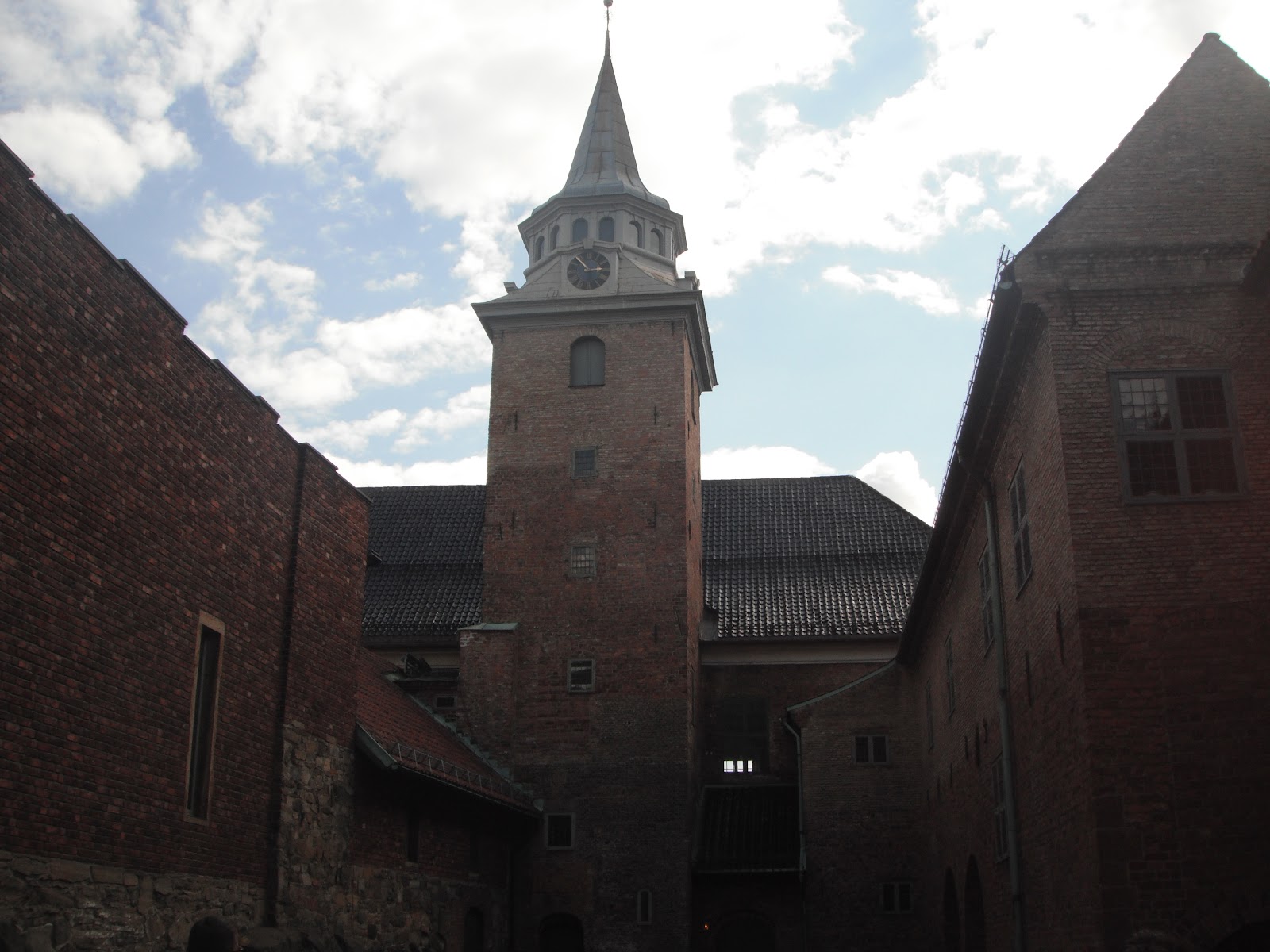
I took the ferry back to the central city. Next I walked to the Akershus Fortress and Castle.
It was also under construction but I still toured the castle.
It was originally built in the 1300's primarily to defend Oslo, capital of Norway.
It survived many attacks from Sweden. In the 17th century the castle was remodelled to be more renaissance  in appearance.

After WWII and the Nazi German assault on Noway, many parts of the castle were destroyed and later restored in the 1900's. There were a few rooms that survived.
The castle is still in current use as it houses the representation rooms of the Norwegian Government.


It was close to 4pm by the time I finished my tour of the castle, and I met up with Frank. We ate some crepes and walked around the city a bit.
We wondered through a cemetery where the most famous Norwegians are buried.


This is Edvard Munch's grave ------->
He is one of the most famous painters in Norway.


Frank and I spent the evening hanging out in a popular park. We went to a pub later on and played some foosball. It was great fun!